
The homes in Brookfield were built mostly from the late 1940s through the 1980s, and the panels and wiring installed then were never sized for a car charger, a second refrigerator, or a home office drawing power around the clock. The network of electrical contractors in Milwaukee reaches these houses every day, and what the crews find is consistent: breaker boxes with no room to grow and professional electrical panel upgrade needs that homeowners have been putting off for years.
Brookfield homeowners call a local electrician rather than a general one because the work in a house built this way is specific - what is behind the wall and under the floor decides the job before a single tool comes out.
What Local Electricians Know About Brookfield Homes
A local electrician who has worked in Brookfield knows that most of these houses sit over a full basement, that the panel is usually on a basement wall, and that the wiring runs through finished ceilings that were added decades after the house went up.
Two kinds of work come up again and again in these houses: panels that have run out of space and circuits that trip the moment a second appliance starts. Homeowners in nearby Elm Grove, WI electrical services face the same pattern in houses built the same way.
If a breaker will not reset or an outlet feels warm, the right move is to have it looked at before a small problem becomes a dangerous one.
Work Matched to How Brookfield Homes Are Built
An off-the-shelf approach fails in these houses because running a new circuit through a finished basement ceiling is not the same job as running one through open framing - walls come into it, and the path matters.
Detached houses with a garage or workshop at the back of the lot need outdoor runs that aged differently from the main house, while attached homes sometimes share service equipment that complicates any upgrade. Expert ceiling fan installation in a house with plaster ceilings and no attic access above is a different job than the same work in new construction.
The range of work that fits these houses includes quality GFCI circuit installation for kitchens and bathrooms that were wired before grounding was required, specialist generator installation for homeowners who want backup power without overloading an already-tight panel, reliable recessed lighting installation in finished rooms where the ceiling access is limited, and professional smoke detector installation to bring older houses up to what current safety standards call for.
What the Age of Brookfield Homes Still Decides Today
Most homes in Brookfield went up from the late 1940s through the early 1980s. Houses built in those decades were wired for 60 to 100 amps, received aluminum branch wiring if they went up in the late 1960s or early 1970s, and were laid out with far fewer circuits than the kitchens and bathrooms in those same houses are expected to run today. Three things follow from that and still shape every service call: the panel is usually at capacity, the grounding is incomplete or absent, and the circuit count was set for a way of living that no longer matches the house.
The Panel Has No Room Left
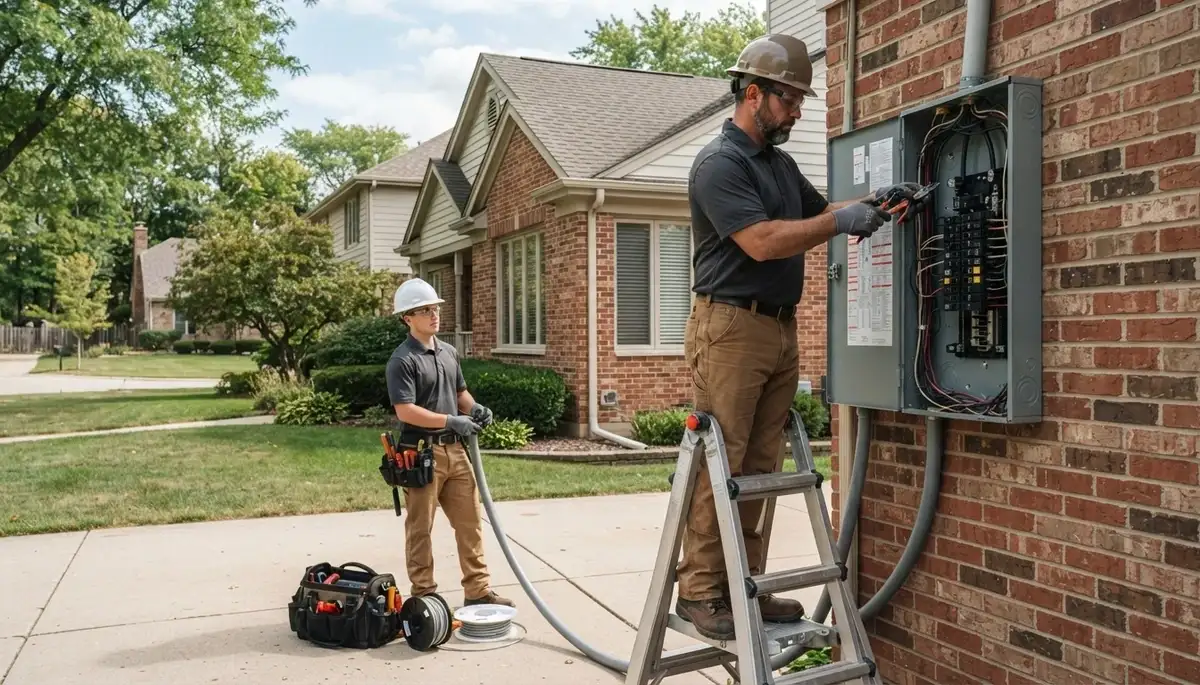
The breaker box in a Brookfield home from this era often shows a panel with every slot filled, double-tapped breakers sharing a space meant for one, or a fuse box that was never replaced. A panel in that condition cannot accept a new circuit safely, and adding load to it without addressing the capacity first puts the whole house at risk.
Local electricians replace the panel or add a subpanel to restore room for the circuits these houses actually need. Homeowners in Menomonee Falls, WI residential electricians territory face the same panel-capacity ceiling in houses from the same build period.
Outlets That Have No Ground
Two-prong outlets in a Brookfield home are not just inconvenient - they signal that the circuit behind the wall was installed before grounding was required. Plugging a three-prong adapter into an ungrounded outlet does not fix the problem; it only masks it. Sensitive electronics, appliances with metal housings, and anything that draws a significant load are all at greater risk on an ungrounded circuit.
Replacing two-prong outlets or adding GFCI protection where grounding cannot be run brings these circuits to a level that protects the homeowner and the equipment connected to them.
Connections That Run Hot
In houses built in the late 1960s and early 1970s, aluminum wiring was used for branch circuits. Aluminum expands and contracts at a different rate than the brass terminals on standard outlets and switches, and over decades that movement loosens the connection. An outlet warm to the touch, lights that dim when another circuit starts, or a breaker that trips without an obvious cause can all trace back to a connection that has worked loose at the wire.
Correcting aluminum wiring connections requires the right fittings and the right outlets rated for aluminum, and doing it properly stops the heat at the source and keeps the circuit stable.
The Service Was Never Sized for This Load
A car charger alone can draw as much power as several rooms of the house combined, and a pool pump running alongside central air can push a 100-amp service past what it was ever meant to carry. When those loads were added to a Brookfield home over the years, the panel absorbed each one without a formal review of whether it had room.
Adding a subpanel or upgrading to 200-amp service gives the house the capacity to run a car charger, pool equipment, and central air at the same time without tripping breakers or stressing the wiring between the meter and the panel.
Finished Spaces That Block the Path
In a Brookfield home where the basement was finished years after the house went up, the ceiling above it is now drywall, and the path a new circuit would take is no longer open. Running wire through a finished space means planning the route before the work starts and minimizing what gets opened.
Local electricians who work in these houses regularly know how to route a new circuit through a finished basement with the fewest cuts, using the panel location and the existing framing to find a path that gets the work done without turning a one-day job into a week of patching.
Call (414) 409-0101 to arrange a visit with a local electrician who can look at the panel, the wiring, and the load in your Brookfield home without any pressure to commit on the spot.
On Call Electrical brings work that holds to every house in Brookfield, WI.

Electrical Services Available Across Brookfield, WI
The list below covers the full range of work available to Brookfield homeowners. Find the item that matches what the house needs and call to talk through the details.
Urgent Electrical Work in Brookfield, WI
- Electrical Repair - A breaker that will not reset or an outlet that stopped working entirely needs a same-day look, not a wait.
- Outlet Repair - An outlet warm to the touch or one that sparks when something is plugged in is not a nuisance; it is a fire risk.
- Switch Repair - A switch that buzzes, feels hot, or no longer controls the fixture reliably has a connection problem behind the wall.
- GFCI Circuits - Kitchens and bathrooms in older Brookfield homes often have no GFCI protection at all, which puts the household at risk near water.
- Electrical Service - When the main service feeding the house is damaged or failing, everything connected to it is at risk until it is corrected.
If any of these match what the house is showing, a call to a local electrician is the right next step.
Panel, Capacity, and Wiring Work in Brookfield, WI
- Electrical Panel Upgrade - A panel originally sized for a much smaller load cannot safely carry what a Brookfield home runs today without an upgrade.
- Electrical Panel Installation - Replacing a fuse box or a panel that has reached the end of its service life with a modern breaker box restores room and reliability.
- Electrical Wiring - Wiring that was installed decades ago and has never been reviewed may have deteriorated in ways that are not visible from the outside.
- New Construction Wiring - Additions and finished basements in Brookfield homes need wiring that meets current requirements, not a tap off an existing circuit.
- Home Electrical Inspections - A full inspection tells the homeowner exactly what the panel and wiring can carry and what needs attention before it becomes urgent.
These houses were wired for a way of living that has changed significantly, and the panel and wiring work listed here brings them in line with what is actually being asked of them.
Safety and Protection Work in Brookfield, WI
- Whole Home Surge Protection - A single power surge can damage every appliance and device connected to the house at once; whole-home protection stops it at the panel.
- Lightning Surge Protection - Homes in Brookfield with older panels and ungrounded circuits are more exposed to surge damage than houses with modern protection in place.
- Fire Alarm Installation - Smoke detectors placed and wired correctly give the household the earliest possible warning, which is what saves lives in a fire.
- GFC Outlets - Replacing two-prong outlets in kitchens, bathrooms, and garages with GFCI outlets corrects an ungrounded circuit without running new wire to every box.
- Home Energy Audit - An energy audit finds where the electrical system is working harder than it should and where a targeted fix reduces what the house costs to run.
Each item on this list addresses a risk that a Brookfield homeowner can picture: a surge that wipes out a refrigerator and a laptop at the same moment, a smoke detector that was never wired to the panel, or an outlet near the kitchen sink that has no protection at all. Getting these corrected one by one is how a house built in the fifties or sixties becomes as safe as a house built last year.
Lighting, Outdoor, and Added-Load Work in Brookfield, WI
- Electric Car Charger Installation - A dedicated circuit sized for a car charger keeps the charger from competing with the rest of the house for capacity.
- Landscape Lighting - Outdoor lighting runs on circuits that age differently from the house, and a Brookfield home with mature trees and a long driveway often needs a fresh run.
- Security Lights - Motion-activated security lighting on a detached garage or along the back of the house needs a circuit that reaches the structure reliably.
- Ceiling Fan Installation - Adding a ceiling fan to a room in a Brookfield home that was not wired for one requires a new circuit and a box rated for the fan's weight.
- Pool Pumps - A pool pump running on a circuit that was not sized for it trips breakers and shortens the life of the equipment; a dedicated circuit fixes both problems.
Brookfield homeowners adding modern load to houses built for a fraction of it need circuits and panels that were planned for what is actually being plugged in, not what the house was carrying forty years ago.