On Call Electrical
Call Us Now! (414) 409-0101

Thermostat Installation Milwaukee Homeowners Can Count On

Milwaukee homes built before the 1980s often carry wiring that needs evaluation before a new thermostat can do its job reliably.

Call Us Now or Request a Free Quote

(414) 409-0101

Thermostat Installation Done Right for Milwaukee Homes

Thermostat Installation in Milwaukee starts with understanding what is already in the wall. Most houses here went up between the 1920s and the 1960s, and the electrical contractor in Milwaukee who opens that wall may find wiring that predates modern control systems entirely. Panels in those houses were sized for far fewer circuits than a home runs today, and a new thermostat connected to an undersized or aging system will not perform the way the manufacturer describes. Contractors who do professional electrical wiring alongside thermostat work catch those gaps before they become a callback.

Milwaukee houses built before the 1970s typically sit over a full basement, which means the low-voltage wiring that feeds a thermostat runs through finished ceilings or inside walls that were never meant to be opened again. That access question decides whether thermostat installation is a few hours of work or a job that involves pulling wire through an existing structure. Postponing a proper installation and leaving an incompatible or failing thermostat in place means the heating and cooling equipment runs longer than it should, and the panel that was already near capacity carries that extra load every cycle. A quality home energy audit before the installation gives a clear picture of what the house is actually drawing.
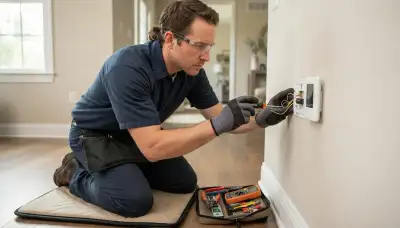
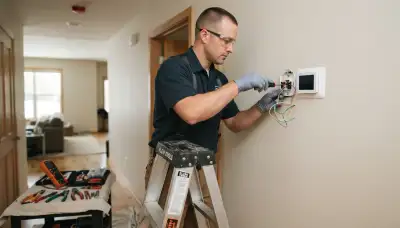
Thermostat installation service for Milwaukee, WI homes by a professional electricianThermostat installation service for a Milwaukee, WI home by a professional electrician

What type of electrical project is this?
  • TCPA Compliance
  • Comodo SSL Certificate
  • True Trust

Electrical Work Around Thermostat Installation Across Milwaukee Homes

Thermostat installation rarely stands alone. These four services come up often in the same visit, and handling them together saves Milwaukee homeowners a second appointment.

Panel Capacity and Thermostat Compatibility

A panel that was sized for a house without central air can struggle when a new thermostat puts a modern system into longer run cycles. Contractors check available capacity before the thermostat goes in, and expert electrical panel upgrade work is scheduled at the same time when the numbers do not clear.

Check Panel Capacity

Switch and Control Wiring in Older Houses

Homes built before the 1970s often have control wiring that does not include a common wire, which most smart thermostats require to operate without draining batteries or losing settings. Reliable switch repair and low-voltage wiring corrections are part of what makes a thermostat installation hold up over time in houses built this way.

Fix Control Wiring

Outlet and Circuit Conditions Near the Thermostat

When outlets near the thermostat run warm to the touch or lights on the same circuit dim when the system kicks on, that is a signal the circuit serving that part of the house is carrying more than it was designed for. Addressing those conditions before the thermostat goes in keeps the new equipment from inheriting an old problem.

Inspect Nearby Circuits

Generator Backup for Homes With New Thermostat Systems

A programmable or smart thermostat loses its schedule and settings when power goes out, and in houses where heating equipment depends on that thermostat to sequence correctly, an outage can mean a cold house for longer than expected. Specialist generator installation keeps the thermostat and the equipment it controls running through an interruption.
Add Generator Backup

On Call Electrical
Request a Free QuoteCall now(414) 409-0101

How Load Changes Through the Year Affects Thermostat Installation in Milwaukee

The same house carries different demands in each season, and those shifts reveal whether the wiring and panel behind a thermostat are up to what the equipment needs.

Spring Thermostat Installation: Milwaukee, WI Prep Season

Spring is the right window for thermostat installation in Milwaukee homes because the heating equipment is winding down and the cooling load has not arrived yet. Contractors can pull wire, correct low-voltage runs, and test the full system without the pressure of a house that needs to be comfortable by tonight. Outdoor circuits and pool equipment coming back into use get evaluated in the same visit.

Schedule Spring Thermostat Installation

Summer Thermostat Installation: Milwaukee, WI Peak Load

A panel sized in the 1950s running central air through a long summer is the season when an undersized service stops hiding. A thermostat that is pushing equipment harder than the panel can handle shows up as tripped breakers and rooms that never reach the set temperature. Specialists in electrical panel installation and thermostat work can address both in one scheduled visit before the problem compounds.

Schedule Summer Thermostat Installation

Fall Thermostat Installation: Milwaukee, WI Transition Window

Fall is the handoff point, and whatever the cooling season exposed about the wiring or panel behind the thermostat is still visible and correctable before the heating load arrives. A thermostat installation done in fall gives the system a chance to run through a full heating cycle before the house depends on it through the coldest months.

Schedule Fall Thermostat Installation

Winter Thermostat Installation: Milwaukee, WI High-Demand Period

Heating equipment, space heaters added to rooms that do not warm evenly, and holiday lighting all stack onto circuits in a Milwaukee home that were never sized to carry them at once. A thermostat that is not wired correctly or is paired with a panel near its limit will surface those problems in the months when the house has no margin. Getting the installation right before winter closes in keeps all of it from landing at once.

Schedule Winter Thermostat Installation
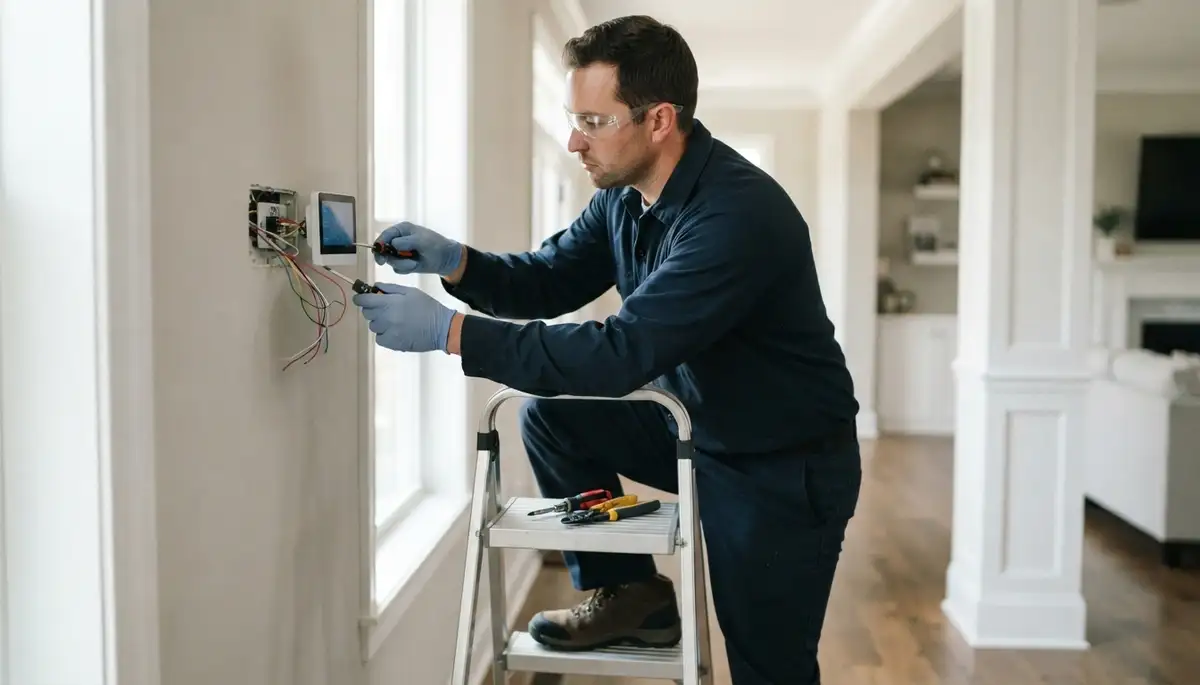
Thermostat installation by a Milwaukee, WI electrician for residential heating and cooling systems

Real Milwaukee Homeowners on Finding an Electrical Contractor

Electrical Contractor Coverage Across Milwaukee, WI

On Call Electrical connects homeowners across the Greater Milwaukee area with local electrical contractors ready to help. From the established residential streets of Cudahy to the growing newer neighborhoods of Mequon, coverage reaches every corner of the area regardless of where the home sits.

Homes throughout Milwaukee are covered, including outlying properties on larger lots in Muskego, where local electrical professionals are available whenever a homeowner needs help.

Electrical Contractor Coverage Areas and Zip Codes Across Milwaukee

Find your neighborhood in the Milwaukee-area zip codes below and see where On Call Electrical answers residential electrical repair and service calls.

  • Downtown Milwaukee, WI (53202)
  • Walker's Point, WI (53204)
  • Bay View, WI (53207)
  • Riverwest, WI (53212)
  • Wauwatosa, WI (53213)
  • West Milwaukee, WI (53214)
  • Brookfield, WI (53045)
  • New Berlin, WI (53151)
  • Oak Creek, WI (53154)
  • Franklin, WI (53132)
  • Greendale, WI (53129)
  • Hales Corners, WI (53130)
  • Cudahy, WI (53110)
  • Saint Francis, WI (53235)
  • South Milwaukee, WI (53172)
  • Menomonee Falls, WI (53051)
  • Butler, WI (53007)
  • Elm Grove, WI (53122)
  • Mequon, WI (53092)
  • Thiensville, WI (53092)
  • Waukesha, WI (53186)
  • Sussex, WI (53089)
  • Muskego, WI (53150)
  • Caledonia, WI (53108)
  • Lannon, WI (53046)
  • Shorewood, WI (53211)
  • Whitefish Bay, WI (53217)
  • Glendale, WI (53209)
  • Brown Deer, WI (53223)
  • Greenfield, WI (53220)

Reach dependable professionals near you and have the work done right.

  • No-Cost Quotes
  • Verified Pros
  • Prompt Replies

Electrical Contractor FAQs for Milwaukee, WI Homeowners

Electrical contractor work in Milwaukee, WI covers homes built across several decades, each with its own wiring realities. Get plain answers about urgent symptoms, what panel and circuit work actually involves, how to add modern loads to older service, and how to find someone local fast.

  • Stop using that outlet immediately and do not reset the breaker if it has tripped. A warm outlet in a Milwaukee home often points to aluminum branch wiring or a loose connection generating heat at the splice. Do not wait until morning. Contractors connected through On Call Electrical offer around-the-clock emergency response, and heat at a connection is not a wait-and-see problem.

  • Most new circuit work in a Milwaukee home with an unfinished basement moves faster than homeowners expect because the contractor can run cable through the basement ceiling rather than opening finished walls. Diagnosis and load assessment come first, then the run itself, then permit and inspection before the circuit goes live. A straightforward single circuit often wraps in one visit; a panel upgrade adds time.

  • A burning smell, an outlet warm to the touch, or lights that dim sharply when an appliance starts are not minor in Milwaukee homes where aluminum branch wiring was common. Those symptoms mean heat is building at a connection. A single dead outlet or a breaker that trips once and holds is lower urgency but still warrants a diagnosis before adding load to that circuit.

  • On Call Electrical matches Milwaukee homeowners with local contractors and lets them compare quotes side by side rather than calling around one at a time. The matching is the service; the contractors do the work. When comparing quotes, look at what each scope actually covers, not just the bottom line, because two estimates at different prices often describe two different jobs.

  • A level 2 car charger draws a dedicated 240-volt circuit and a meaningful share of total service capacity. Many Milwaukee homes built before the mid-seventies are still running 100 amp service sized for a load that predates central air and a garage full of power tools. The contractor will assess available capacity first; a panel upgrade to 200 amp service is often what has to happen before the charger can be installed safely.

  • Service amperage is the total power the house can draw at once. In Milwaukee homes, the number is printed on the main breaker inside the panel or stamped on the meter base outside. A 60 or 100 on that breaker means the house was sized for a much lighter load than most households run today. That number is the starting point for any conversation about adding circuits or new equipment.

  • Most of Milwaukee's housing stock went up between the nineteen-twenties and the early nineteen-sixties, which means a large share of homes here in Milwaukee still contain knob-and-tube wiring or early rubber-insulated cable. That wiring was never grounded, degrades with age, and was sized for a fraction of today's load. Two-prong outlets throughout the house are the visible sign that grounding was never part of the original installation.

  • Replacing a fuse box in a Milwaukee home involves more than swapping the panel. The contractor has to assess whether the service entrance cable is sized for a modern panel, whether the grounding system meets current practice, and how many circuits need to be reconnected. Homes across Milwaukee with original service from the mid-century era often need the meter base updated as well. Comparing quotes on scope rather than price alone prevents surprises mid-job.