
The electrical contractors in Milwaukee serving Franklin work on wood-frame homes over full basements, most of them built in the fifties and sixties, where a breaker that will not reset or an outlet warm to the touch often points back to a panel that was never sized for what the house runs today. Reaching expert electrical panel upgrade work is faster when the electrician already knows what is behind the drywall in a house built this way.
Franklin homeowners call a local electrician rather than a general one because the age of these houses shapes every part of the job, from how the wiring is run to what the panel can actually handle.
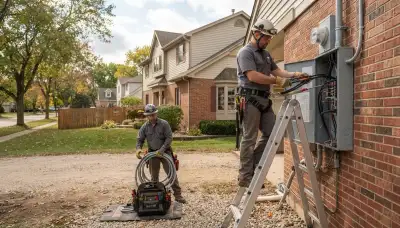
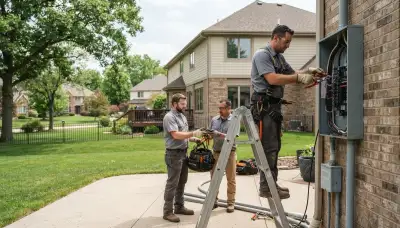
Knowing Franklin Homes Changes What the Work Actually Involves
A local electrician working in Franklin recognizes the panel locations, the wire gauges, and the circuit counts common to homes built in the fifties and sixties. That knowledge keeps a job from turning into a discovery project once the cover comes off.
Homes here most often need panel capacity work and circuit additions, two jobs that look simple until the electrician finds what is actually behind the wall. Homeowners in Oak Creek, WI electrical services face similar situations in houses of the same age.
If something in the panel or the wiring is already showing a warning sign, getting it looked at now costs far less than waiting until it fails.
Electrical Work Matched to How Franklin Homes Are Built
An off-the-shelf approach fails in Franklin because most of these homes sit over a full basement with the panel mounted on the basement wall, which means running a new circuit is straightforward when access is clear and a longer project when finished walls stand in the way.
Wood-frame homes with unfinished basements allow new circuits to be run without opening walls. Homes with finished lower levels and attached garages add steps to every job. Each layout changes the time and materials involved. Specialists in GFCI circuit work know how to route protection to kitchens and bathrooms without tearing out finished surfaces.
Franklin homeowners can count on professional generator installation, quality recessed lighting installation, reliable ceiling fan installation, and expert smoke detector installation from electricians who know what these houses are built to carry.
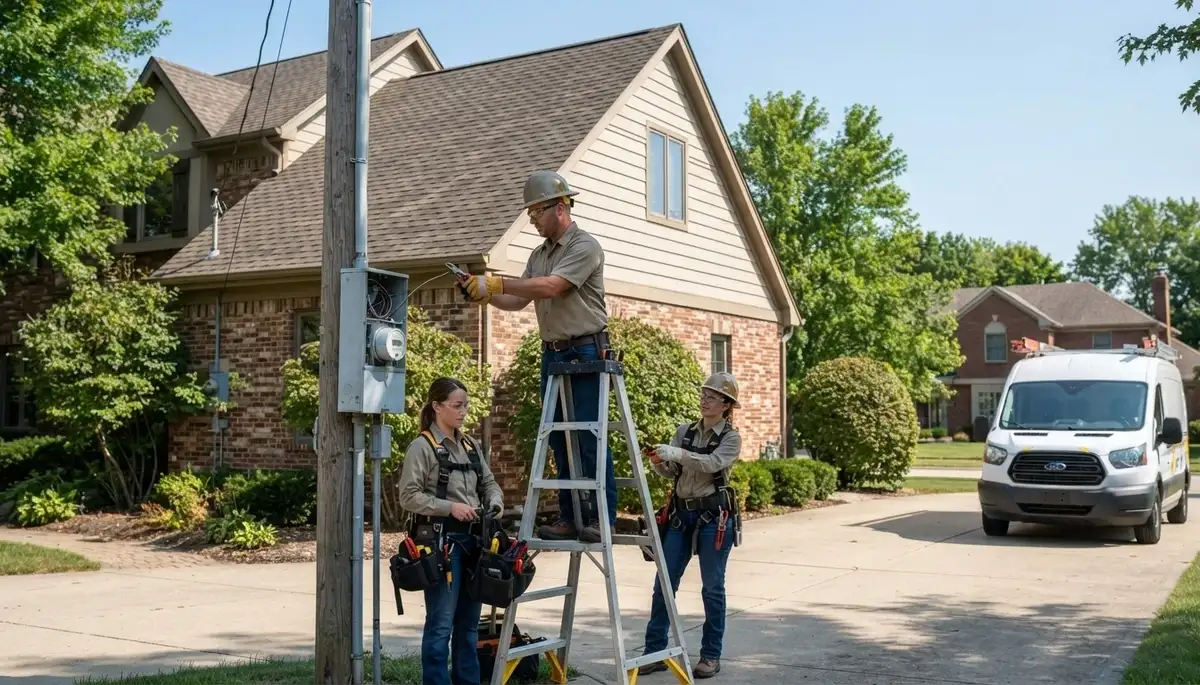
What the Age of Franklin Homes Still Decides Today
Most homes in Franklin went up in the fifties and sixties, a period when a sixty-amp panel was standard, aluminum branch wiring was not yet in use, and two-prong outlets were the norm throughout the house. Three things follow from that: the panel was sized for far fewer circuits than the house runs now, grounding was not part of the original installation, and the circuit count in kitchens and bathrooms was never meant to carry modern appliances.
Panel Running Out of Room
A homeowner in Franklin notices the breaker box is full, with no open slots and a panel door that barely closes over a tangle of wires. Behind that is a sixty-amp or eighty-amp service installed when the house had no central air, no dishwasher, and no garage door opener. Left alone, a full panel means double-tapped breakers and circuits that trip without warning.
Local electricians replace the panel and bring the service up to what the house actually draws, a fix that holds because the new equipment is sized for the load rather than for the house as it was originally built. Homeowners in Muskego, WI get the same panel work from electricians who understand houses of this age.
Two-Prong Outlets Throughout the House
A homeowner sees two-prong outlets in every room and reaches for an adapter to plug in anything modern. What sits behind that is wiring installed before grounding was required, which means the entire circuit lacks the path that protects appliances and the people using them. Using adapters long-term puts equipment at risk every time there is a surge or a fault.
Local electricians add grounding to existing circuits or install the outlet-level protection that brings those circuits up to current standards, and the homeowner stops relying on adapters that were never meant to be a permanent fix.
Connections That Run Warm
Lights dim when a second appliance starts, or an outlet feels warm after normal use. In homes built during the late sixties and into the early seventies, that points to aluminum wiring at the connections, a material that expands and contracts differently than the devices it feeds and loosens over time. Left alone, a loose aluminum connection generates heat that can damage the outlet, the device, or the wiring itself.
Local electricians inspect every connection point, fit the right devices rated for aluminum wiring, and restore a tight connection that no longer runs warm. The two things that improve immediately are the stability of the circuit and the temperature of the outlet.
Modern Loads on a Service That Was Never Sized for Them
A car charger in the garage or a pool pump added to the backyard draws more from the panel than the original service was ever meant to supply. On a hot day those loads run together and the panel is carrying more than it was designed to handle. A service sized for a simpler house cannot absorb what has been added to it without showing the strain through tripped breakers and slow charging.
Local electricians add a dedicated circuit for the charger, assess whether the service entrance needs to be upgraded, and confirm the panel can handle every load the homeowner wants to run at once. After the work, the car charges overnight without tripping anything, and the pool pump runs without pulling down the rest of the house.
Basement Access That Complicates Every Run
In Franklin homes with finished basement ceilings and interior walls, running a new circuit from the panel to an upper floor means finding a path that does not require opening every surface along the way. Tight joist bays, fire blocks built into the framing, and finished walls on both sides of the run can turn a straightforward circuit addition into a job that takes twice as long.
Local electricians plan the route before the work starts, use low-impact methods to fish wire through existing framing where possible, and patch only what has to be opened. The homeowner gets the new circuit without a room that looks like a renovation project when the work is done.
Arrange a no-pressure visit with a local electrician who knows Franklin homes by calling (414) 409-0101. A quick look at the panel and the wiring tells the homeowner exactly what needs attention and what can wait.
On Call Electrical delivers work in Franklin, WI that holds up long after the job is done.

Electrical Services Available Across Franklin, WI
The work below covers the range of what local electricians handle in Franklin homes. Find the item that matches what the house needs right now.
Urgent Electrical Repairs for Franklin, WI Homes
- Electrical Repair - A breaker that trips repeatedly or an outlet that stopped working points to a fault that needs a look before it gets worse.
- Outlet Repair - An outlet that sparks, stays warm, or accepts a plug loosely is a connection that has failed and needs to be replaced.
- Switch Repair - A switch that buzzes, feels warm, or controls a light intermittently has a loose connection behind the plate.
- Ceiling Fan Repair - A fan that wobbles, hums, or stops responding to the switch has a wiring or mounting problem that a local electrician can sort out.
- Home Electrical Inspections - A full inspection of the panel, grounding, and circuits tells the homeowner exactly what the house is carrying and what needs attention.
If any of these match what the house is doing right now, a local electrician can get there quickly.
Panel, Service, and Wiring Work for Franklin, WI Homes
- Electrical Panel Upgrade - A panel installed when the house was built was sized for far fewer circuits than the home runs today.
- Electrical Panel Installation - A new panel replaces a fuse box or an undersized breaker box with equipment matched to the actual load.
- Electrical Service - The service entrance brings power into the house, and one sized for an older load cannot absorb what has been added.
- Electrical Wiring - Wiring in homes built in the fifties and sixties is approaching the end of its useful life in many runs.
- New Construction Wiring - Additions and finished basements need new circuits run from the panel, not tapped from whatever is nearby.
Panel and wiring work in Franklin homes often uncovers what was done in a previous update and whether it was done to a standard that will hold going forward.
Safety and Protection Work for Franklin, WI Homes
- GFC Outlets - Kitchens and bathrooms in older Franklin homes often lack the outlets with test and reset buttons that protect against shock near water.
- GFCI Circuits - Adding protection at the circuit level covers every outlet downstream without replacing each one individually.
- Whole Home Surge Protection - A surge enters through the service entrance and can reach every device in the house before a single breaker responds.
- Fire Alarm Installation - Smoke detectors that are wired into the panel alert every unit in the house at once rather than only the room where the detector sits.
- Lightning Surge Protection - A direct or nearby strike sends a voltage spike through the wiring that unprotected equipment cannot survive.
Safety work in Franklin homes matters most in houses where the original installation predates the protections that are now standard, and where the wiring has been carrying modern loads for decades longer than it was designed to. Getting the protection in place before something fails is the practical choice for any homeowner who has looked at the panel and wondered what it is actually doing.
Lighting, Outdoor, and Added-Load Work for Franklin, WI Homes
- Electric Car Charger Installation - A dedicated circuit sized for the charger keeps the car charging overnight without pulling down other circuits in the house.
- Landscape Lighting - Outdoor lighting runs on its own circuit so a tripped breaker inside does not take the yard dark.
- Security Lights - Motion-activated lights on the exterior need a circuit that is not shared with anything else that could pull it down at the wrong moment.
- Recessed Lighting Installation - Adding recessed lights to a finished room in a Franklin home means routing new wiring through framing that was not designed for it.
- Generator Installation - A standby generator tied to the panel keeps the house running when the service goes out, without running extension cords through the house.
Added-load work in Franklin homes starts with a look at what the panel is already carrying and what headroom it has left before the service needs to come up with it.