The electrical services in Milwaukee network reaches South Milwaukee homes that were built through the forties, fifties, and sixties, a time when panels were sized for far fewer circuits than a household runs today. A local electrician working here will find fuse boxes, two-prong outlets, and professional electrical panel upgrade needs that show up in nearly every job.
Homeowners here call a local electrician rather than a general one because the work inside these houses requires knowing what was put in when they were built and what it can no longer handle.
Knowing South Milwaukee Homes Changes How the Work Gets Done
A local electrician working in South Milwaukee knows that most of these houses were built with a basement panel, wiring that predates grounding requirements, and service that was sized for a fraction of what a household draws today. That knowledge shapes every job before the first tool comes out.
The two kinds of work that come up most often are panel replacements on houses that still run on fuses and circuit additions for kitchens and bathrooms that trip on a daily basis. Homeowners in Cudahy, WI electrical services face similar demands from homes of the same era.
Getting the problem looked at now keeps a nuisance into something that shuts down a room or damages appliances.
Work Matched to How South Milwaukee Houses Are Actually Built
An off-the-shelf approach fails in these houses because the panel is in the basement, the wiring runs through finished walls, and the service entrance was designed for a load that no longer reflects how the home is used. Every job here starts with understanding what is already there.
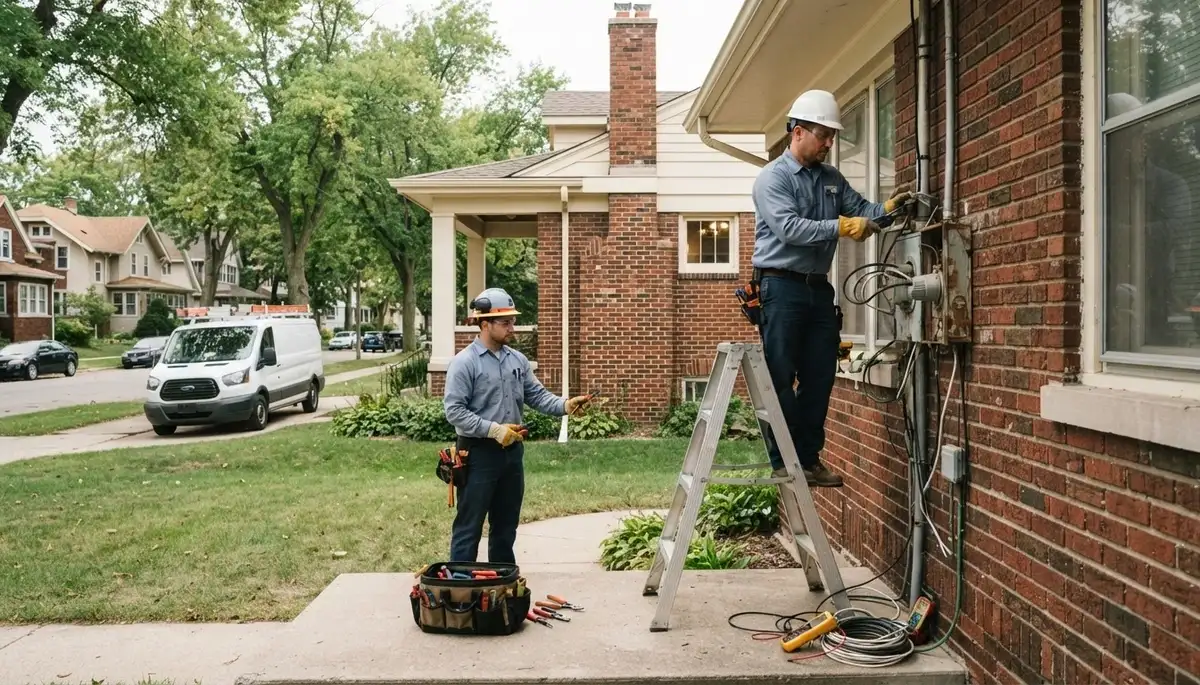
Houses built close together with shared lot lines limit where equipment can be staged, and detached garages on narrow lots mean longer outdoor runs. Brick construction and plaster walls change how a new circuit gets from the panel to where it is needed. Expert GFCI circuit installation is one of the most common additions in bathrooms and kitchens that have never had it.
Four services that fit what South Milwaukee homes are being asked to do now: reliable generator installation for houses where a power interruption means a flooded basement, quality electrical wiring replacement in rooms where the original conductors have never been touched, specialist electric car charger installation on a service that needs to be evaluated before the circuit is added, and professional smoke detector installation in homes where detection has not been updated since the house was built.
What South Milwaukee Homes Were Built With Still Shapes the Work Today
Most of the houses in South Milwaukee went up in the forties, fifties, and into the early sixties. At that time, a sixty-amp fuse box was standard, two-prong ungrounded outlets were the norm, and wiring was sized for a handful of appliances. Three things follow from that: the panel is almost certainly undersized for what the house runs now, grounding is absent or incomplete, and the circuit count in the kitchen and bathrooms falls short of what current use demands.
Fuses That Keep Blowing
When a fuse blows every time two appliances run at once, the panel is telling the homeowner it has reached its limit. In these houses, a sixty-amp fuse box was never meant to carry a refrigerator, a microwave, a washer, and a window unit at the same time. Left alone, the temptation is to install a larger fuse, which removes the only protection the circuit has.
Local electricians replace the fuse box with a breaker panel sized for what the house actually draws, and the circuits are mapped and labeled so the homeowner knows what runs where.
Outlets That Have No Ground
Two-prong outlets throughout a house mean the wiring behind them was installed before grounding was required. Plugging a three-prong adapter into an ungrounded outlet does not add protection; it only changes the shape of the opening. Computers, televisions, and kitchen appliances connected this way are exposed to voltage spikes that a grounded outlet would redirect safely.
Adding grounding to existing circuits or installing the outlets with test and reset buttons where grounding cannot be extended brings the home up to what modern appliances expect and reduces the risk of damage to equipment.
Circuits That Trip in the Kitchen
A kitchen wired in the fifties may have one or two circuits serving the entire room. Today that same room runs a refrigerator, a microwave, a coffee maker, and a toaster, often at the same time. The breaker trips because the circuit was never intended for that load, and resetting it does not solve anything. Over time, a circuit pushed past its rating runs hot at the connections.
Adding dedicated circuits to the kitchen and bathrooms stops the tripping and removes the heat that builds up at overloaded connections, improving both daily use and the condition of the wiring.
A Panel That Was Never Sized for What Was Added
A car charger, a new air conditioning unit, or a shop in the garage each adds a load the original service was not designed to carry. When those loads stack on a panel that was already at its limit, the house draws more than the service can deliver safely. Running the air conditioning on a warm afternoon and starting the car charger at the same time can push the panel past what it was rated for.
Upgrading to a hundred or two hundred amp service gives the panel the room it needs, and the homeowner can run the car charger, the air conditioning, and the kitchen at the same time without watching the breakers. Homeowners in Oak Creek, WI electrical contractor service areas face the same added-load problem on panels from the same period.
Wiring That Cannot Be Reached Without Opening Walls
In a house with plaster walls and a finished basement ceiling, running a new circuit from the panel to a room above means either opening the ceiling below or fishing wire through walls that were never meant to be reopened. The physical layout of the house, not the circuit itself, is what makes the job take longer.
Local electricians who have worked in these houses know which paths are accessible and which ones require a different approach, and they plan the work to limit what gets opened and what needs to be patched afterward.
Call (414) 409-0101 to arrange a no-pressure visit with a local electrician who will look at what the house has and tell the homeowner exactly what it needs.
On Call Electrical handles the work in South Milwaukee homes with care that holds long after the job is done.

Full Electrical Services Available Across South Milwaukee, WI
The list below covers the range of work available to South Milwaukee homeowners. Find what matches the situation and reach out to get it scheduled.
Urgent Electrical Repairs for South Milwaukee, WI Homes
- Electrical Repair - A breaker that will not reset or an outlet that stopped working in a house where the wiring has not been touched in decades.
- Outlet Repair - Outlets that are warm to the touch or have stopped holding a plug in homes where the connections have aged.
- Switch Repair - Switches that spark, feel loose, or control a light that flickers every time it is used.
- GFCI Outlets - Bathrooms and kitchens without the outlets that have test and reset buttons, leaving appliances near water unprotected.
- Home Electrical Inspections - A full look at what the house has, what it is missing, and what needs attention before it becomes a problem.
If the problem is happening now, a local electrician can come out and find what is behind it.
Panel, Service, and Wiring Work for South Milwaukee, WI Homes
- Electrical Panel Upgrade - Replacing a fuse box or an undersized breaker panel in a house that was wired for a fraction of what it now carries.
- Electrical Panel Installation - Installing a new panel when the existing one has no room left and the house needs more circuits.
- Electrical Service - Bringing the service entrance up to what the house is drawing, including the connection from the street to the panel.
- Electrical Wiring - Replacing original wiring in rooms where the conductors have never been updated and are showing their age.
- New Construction Wiring - Running circuits in additions or finished spaces that are being added to an existing South Milwaukee home.
These houses were wired for a different time, and bringing them current means starting with what is already there and working from the panel out.
Safety and Protection Work for South Milwaukee, WI Homes
- Whole Home Surge Protection - A single device at the panel that stops voltage spikes from reaching every appliance in the house at once.
- Lightning Surge Protection - Added protection for homes where a direct or nearby strike can send a surge through the wiring and damage anything connected.
- Smoke Detector Installation - Detectors placed and wired where they will actually respond to a fire in a house with a basement, a finished floor above, and bedrooms at the back.
- Fire Alarm Installation - A connected system that alerts every level of the house, not just the room where the alarm is mounted.
- Home Energy Audit - A look at where the electrical system is losing efficiency and what changes would reduce what the house draws each month.
These services protect what the homeowner has already put into the house and reduce the risk of a loss that no repair can undo. South Milwaukee homes built before grounding was required carry risks that are invisible until something goes wrong, and addressing them one at a time is far less disruptive than dealing with the result of leaving them alone.
Lighting, Outdoor, and Added-Load Work for South Milwaukee, WI Homes
- Electric Car Charger Installation - Adding a dedicated circuit for a charger in a garage or on an exterior wall, after confirming the panel can carry the load.
- Landscape Lighting - Running low-voltage or line-voltage circuits to yard fixtures on a lot where the outdoor wiring has never been extended.
- Security Lights - Wiring motion-activated fixtures at entry points on a house where the exterior outlets are limited or absent.
- Generator Installation - Installing a standby or portable generator connection so the house can run critical circuits when the power goes out.
- Ceiling Fan Installation - Adding a fan where there is only a light fixture, which means adding a circuit or confirming the existing one can carry the motor load.
These additions ask more of a panel that was sized for a simpler time, and getting them done right means evaluating the service before the first circuit is run.