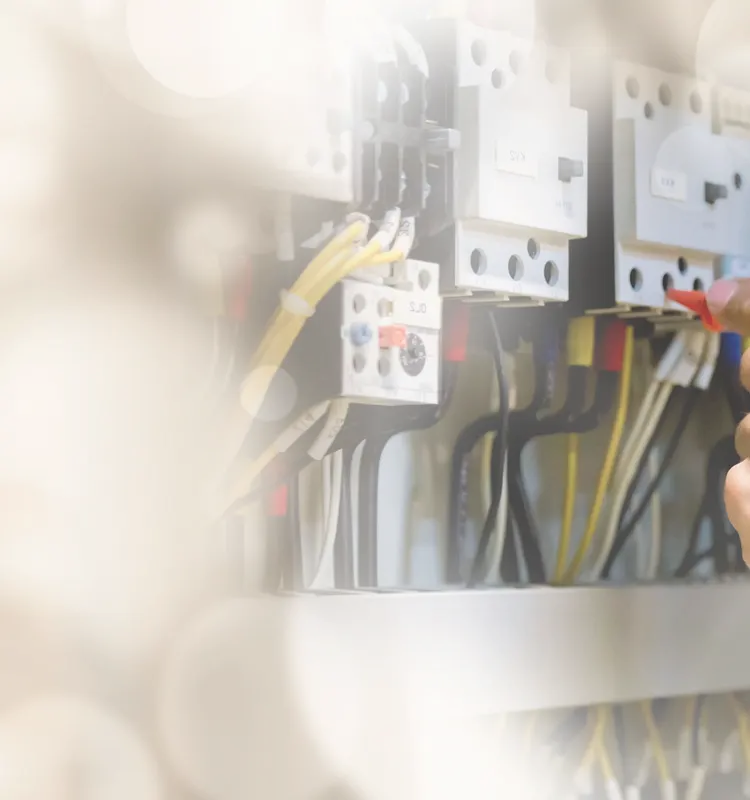
Homes across Waukesha were mostly built in the fifties and sixties, and a local network of electrical contractor in Milwaukee professionals knows exactly what that means: fuse boxes instead of breakers, wiring that was never grounded, and panels that were sized long before central air or a second refrigerator entered the picture. Getting professional electrical panel upgrade work done right starts with knowing what the house was built with.
When the panel is in the basement and the circuits run through finished ceilings, a homeowner needs someone who has worked in these houses before, not someone learning the layout on the job.
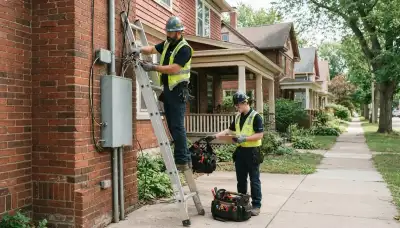
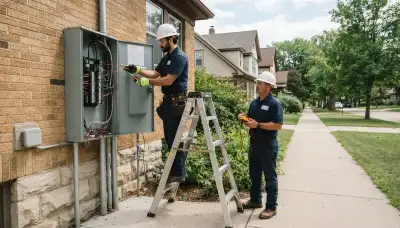
What Local Electricians Know About Waukesha Homes
Most houses in Waukesha went up in the fifties and sixties, wood-frame construction over a full basement, with the panel mounted on the basement wall. A local electrician knows where the wiring runs, how the circuits were divided, and what has likely been added since.
These homes commonly need panel replacements and grounding updates. Electricians serving electrical contractor in Elm Grove, WI and Waukesha both encounter the same original construction, so the work follows familiar patterns across the area.
If an outlet feels warm or a breaker trips every time two appliances run at once, getting an electrician in before the problem grows is the right call.
Electrical Work Matched to How Waukesha Homes Are Built
An approach that works in a newer slab-on-grade house does not transfer cleanly to a wood-frame home over a basement where circuits run through finished walls and the panel sits in a utility corner with limited clearance.
Detached garages and older homes with tight lot lines change how outdoor runs are handled. A brick bungalow with a finished basement calls for different access than an open ranch. Expert GFCI circuit installation in kitchens and bathrooms, for instance, depends on what the walls are made of and where the existing wiring terminates.
Four types of work fit these homes closely: quality electrical wiring for houses where the original runs are undersized, specialist generator installation for homes that have never had a backup source, reliable ceiling fan installation in rooms where the original fixture box was not rated for a fan, and professional home energy audit work to find where the system is losing capacity.
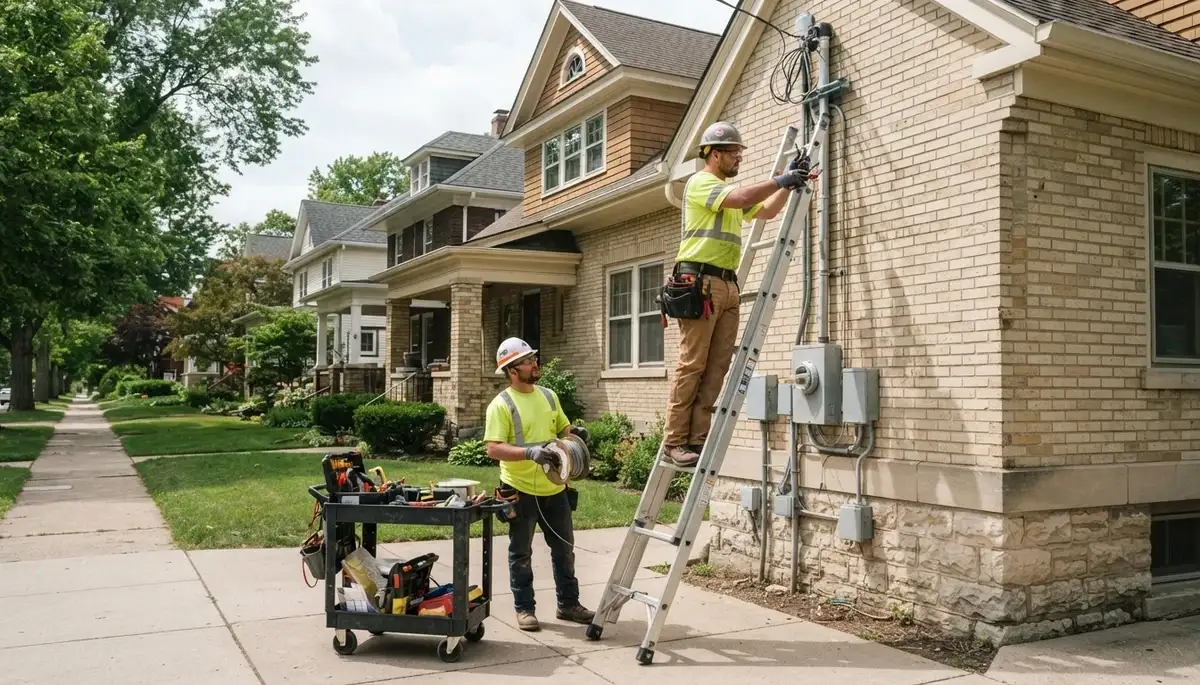
How the Age of Waukesha Homes Shapes the Work Today
Most houses in Waukesha went up in the fifties and sixties, when a 60-amp fuse box was standard, two-prong outlets were code-compliant, and aluminum wiring had not yet entered residential construction. Three things follow from that: the panel is almost certainly undersized for today's load, the outlets in older rooms are ungrounded, and the circuits were drawn for far fewer appliances than a household now runs.
Fuses That Will Not Stay Put
A homeowner replaces the same fuse twice in a month and starts to wonder whether the box itself is the problem. It usually is. A 60-amp fuse box was sized for a house with a few lights, a refrigerator, and a radio. Add a window unit, a dishwasher, and a chest freezer in the basement and the box is running past what it was ever meant to handle. Left alone, the fuses blow more often, and the temptation to use a larger fuse than the circuit calls for creates a fire risk the homeowner may not see coming.
Local electricians replace fuse boxes with breaker panels sized for what the house actually runs today. Crews working electrical repair in New Berlin, WI and in Waukesha carry the same panel inventory because the original equipment in both areas came from the same era.
Two-Prong Outlets Through the House
Two-prong outlets tell a homeowner that the wiring behind them was installed before grounding was required. Plugging a three-prong adapter into an ungrounded outlet does not add protection; it only changes the shape of the opening. Computers, televisions, and appliances with metal housings all depend on a ground path to keep a fault from reaching the person touching the device.
Replacing ungrounded outlets or running a ground wire to existing boxes gives those circuits the protection the original wiring left out. After the work, three-prong outlets function as intended and the homeowner is not relying on an adapter to bridge a gap that does not actually close.
Circuits That Trip When Two Things Run
A kitchen where the toaster and the coffee maker share a circuit, or a bathroom where the hair dryer trips the breaker every morning, reflects how few circuits were drawn when these houses were wired. The rooms were built for one or two loads at a time. The way those rooms are used now puts three or four on the same wire.
Adding dedicated circuits to kitchens, bathrooms, and laundry rooms corrects the mismatch. The breaker stops tripping, extension cords stop serving as permanent wiring, and each circuit carries what it was designed to carry.
A Panel That Was Never Sized for What Got Added
A detached garage workshop, a car charger in the driveway, and a window unit added to a bedroom can push a panel past what it was sized for even if none of those additions was large on its own. The house was wired for a specific load, and every appliance added since then draws against a budget that was already fully spent.
Upgrading to a 200-amp panel and running dedicated circuits for the garage and the car charger gives the house room to carry what is already plugged in, plus what the homeowner plans to add. The panel no longer runs at its limit every time two large appliances start at once.
Basement Panels and Finished Ceilings
In a Waukesha home where the basement is finished and the first-floor ceilings are drywalled, running a new circuit from the panel to a kitchen or bathroom is not a morning of work through an open joist bay. It means routing wire through finished space, finding a path that does not require opening every ceiling panel between the two points.
Local electricians who have worked in these houses know the routing options before they open the first wall. The job gets done with fewer openings and less repair work left behind, because the plan accounts for what the house is actually built like.
To arrange a no-pressure visit from a local electrician who knows these houses, call (414) 409-0101. An electrician can look at the panel, the outlets, and the circuits and tell the homeowner exactly what needs attention.
On Call Electrical delivers work that holds in Waukesha homes built to last.

Full Electrical Services Available in Waukesha, WI
The list below covers the range of electrical work available to homeowners in Waukesha, WI. Find the item that matches what the house needs and reach out to get started.
Urgent Electrical Repairs for Waukesha, WI Homes
- Electrical Repair - A breaker that will not reset or an outlet that stopped working mid-use needs attention before the problem spreads to other circuits in the house.
- Outlet Repair - An outlet that sparks, feels warm, or holds a plug loosely is a sign the connection behind the cover plate has failed and needs to be replaced.
- Switch Repair - A switch that clicks but does not respond, or one that feels hot to the touch, points to a failing connection that should not be left in the wall.
- GFCI Circuits - Bathrooms, kitchens, and garage circuits in these older homes often lack the outlets with test and reset buttons that current practice requires near water.
- Fire Alarm Installation - Smoke detectors in a house this age may be original equipment, past the point where they respond reliably to smoke.
If any of these match what the homeowner is seeing, a call to (414) 409-0101 gets a local electrician on the way.
Panel, Service, and Wiring Work in Waukesha, WI
- Electrical Panel Upgrade - A 60-amp or 100-amp panel in a house that now runs central air, a dishwasher, and a car charger is carrying more than it was ever sized for.
- Electrical Panel Installation - Homes where the original fuse box was never replaced need a full panel installation before additional circuits can be added safely.
- Electrical Service - The service entrance on a house built in the fifties may be undersized for what the house draws today and may need a full service upgrade.
- Electrical Wiring - Original wiring in these houses runs in gauges and configurations that were standard at the time but do not meet the demands of current loads.
- New Construction Wiring - Additions, finished basements, and converted garages need wiring drawn from scratch to match what the new space will carry.
Upgrading the panel and the wiring together gives the house the capacity it needs without leaving the new circuits dependent on old infrastructure.
Safety and Protection Services in Waukesha, WI
- Whole Home Surge Protection - A single surge can damage every appliance and device connected to the house at once; a whole-home device stops that at the panel.
- Lightning Surge Protection - A direct or nearby strike sends a spike through the service entrance that a power strip cannot intercept; panel-level protection catches it first.
- Home Electrical Inspections - A full inspection of a house this age finds the fuse boxes, ungrounded circuits, and overloaded wiring before they become an insurance or safety problem.
- Smoke Detector Installation - Hardwired detectors that communicate with each other give a house this size the coverage a single battery unit cannot provide.
- GFC Outlets - Replacing two-prong outlets with grounded GFCI outlets in wet areas adds both grounding and fault protection where the original wiring provided neither.
A home electrical inspection is the fastest way to find out what the house actually needs and what can wait, so the homeowner is not guessing at priorities. Scheduling one through On Call Electrical at (414) 409-0101 gives a clear picture of what the panel, the wiring, and the outlets are doing and what each repair will involve.
Lighting, Outdoor, and Added-Load Work in Waukesha, WI
- Electric Car Charger Installation - A Level 2 charger needs a dedicated 240-volt circuit; most Waukesha homes built in the fifties and sixties have no spare capacity for one without a panel upgrade.
- Landscape Lighting - Outdoor lighting runs that were added after the house was built often tap circuits that were not sized for the extra load.
- Security Lights - Motion-activated security lights on a detached garage or along a long driveway need a properly rated outdoor circuit, not a tapped indoor one.
- Recessed Lighting Installation - Adding recessed lights to a finished ceiling in a house with a basement below requires routing new wiring without opening the entire ceiling.
- Generator Installation - A standby generator tied to the panel keeps the house running when the service goes down, but the connection requires a transfer switch and a dedicated circuit sized for the generator's output.
Outdoor runs, added appliances, and lighting upgrades all draw against the same panel budget. Getting the panel assessed before adding any of these loads tells the homeowner what the house can carry and what needs to be upgraded first to make room.