The homes in Caledonia are mostly wood-frame houses built through the fifties and sixties, with panels sized for loads that have grown well past what was planned. A network of electrical contractors in Milwaukee reaches these homes every day, handling fuse boxes that were never swapped out, circuits that trip when two appliances run, and the kind of expert electrical panel upgrade work that a house of this age usually needs before anything else gets added.
When the panel is the problem, a general handyman is not enough. Caledonia homeowners call a local electrician because these houses have a specific history that shapes every job from the first look.
What Local Electricians Know About Caledonia Homes
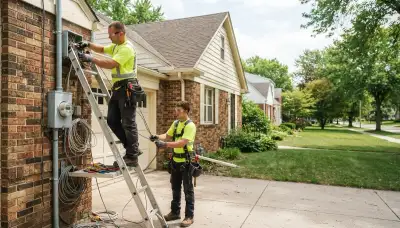
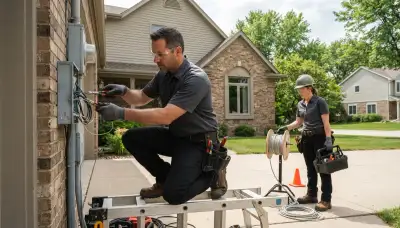
A house built in the fifties or sixties in Caledonia typically has a basement panel, two-prong outlets in most rooms, and wiring that was never touched after the original install. Knowing where the panel sits and what is under the floor decides whether a new circuit takes a few hours or opens walls.
These homes often need both a panel replacement and added circuits for the kitchen or bathroom. Homeowners in nearby Oak Creek, WI electrical services deal with similar work on houses from the same period.
Getting the problem looked at now keeps a manageable fix from becoming a rewire job.
Electrical Work Matched to How Caledonia Homes Are Built
An off-the-shelf approach fails in these houses because the basement, the framing, and the original wiring all push back. Running a new circuit through finished walls in a house with a tight joist bay takes planning that a crew unfamiliar with this construction will not do.
Some Caledonia homes are full two-story frames with finished basements, where the panel is accessible but the upper-floor runs are long. Others are smaller ranch-style builds where the crawlspace or slab makes routing reliable GFCI circuit installation near sinks and bathrooms a careful job.
Four services that fit these homes well: professional generator installation for houses whose panels can support a transfer switch, quality ceiling fan installation in rooms that were never wired for one, specialist recessed lighting installation where the original fixtures left no junction box, and reliable electrical wiring work for houses where the original runs are showing their age.
What the Age of Caledonia Homes Still Decides Today
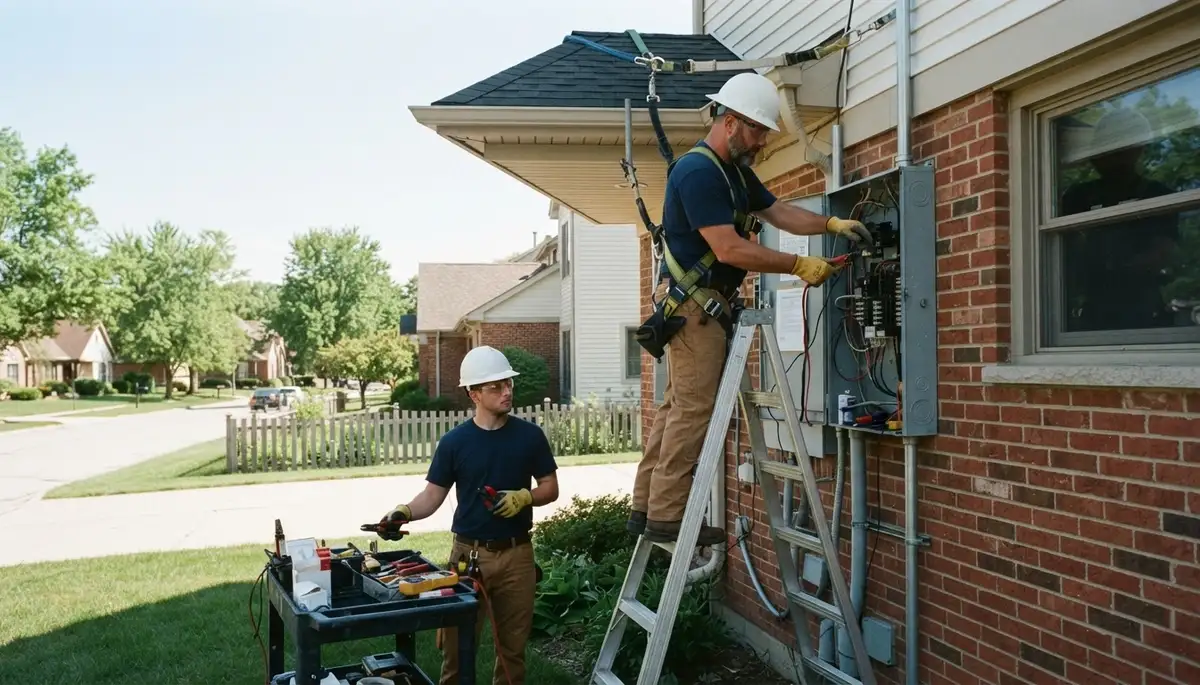
Most of the houses in Caledonia went up through the fifties and into the early sixties. Builders at that time installed 60-amp fuse boxes, two-prong ungrounded outlets throughout, and ran circuits that assumed a refrigerator, a few lamps, and a television as the full load. Three things follow from that: the panel is almost certainly undersized, grounding is absent in most rooms, and the circuit count is too low for how kitchens and bathrooms are used now.
Fuses That Will Not Reset
A fuse box in a house this age blows on a regular basis not because something is wrong with the fuse but because the load has grown past what the box was built to handle. Running a microwave and a coffee maker on the same circuit trips it every time. Left alone, the fix becomes swapping fuses repeatedly until a connection overheats.
Local electricians replace the fuse box with a modern breaker panel sized for the home's current load. For homeowners in Franklin, WI dealing with the same original equipment, the same swap brings the house up to a safe baseline.
Outlets That Are Not Grounded
Two-prong outlets throughout the house mean the wiring behind them was installed before grounding was required. Plugging a three-prong adapter into an ungrounded outlet does not add protection; it just changes the shape of the opening. Electronics, appliances, and anything with a motor are running without the fault path that keeps a short from becoming a fire.
Local electricians add grounding where the existing wiring allows it and install the outlets with test and reset buttons in kitchens, bathrooms, and anywhere near water. The result is a house that meets what current practice requires and protects what is plugged in.
Circuits That Trip in the Kitchen
A kitchen in a house from this period was wired for a fraction of what runs there now. A single circuit shared the refrigerator, the countertop, and the overhead light. Adding a microwave, a toaster oven, or a countertop appliance trips the breaker every time two of them run together. Extension cords used as a workaround add heat at every connection.
Adding dedicated circuits to the kitchen puts each major load on its own run. The tripping stops, and the homeowner can run the kitchen the way it is actually used.
A Panel That Was Never Sized for What Was Added
A car charger in the garage, a new air conditioning unit, or a pool pump draws more than the original 60-amp or 100-amp service was ever sized to carry. The panel handles it by running hot, by nuisance trips, or by simply not supporting the load at all. A house that was fine for decades can hit its limit the month a new appliance is installed.
Local electricians upgrade the panel to a capacity that fits what the house carries now and leaves room for what comes next. After the upgrade, the car charges overnight, the air conditioning starts without dimming the lights, and the homeowner stops watching the breaker box.
Wiring Runs Through Finished Spaces
In a house with finished walls and a low basement ceiling, running a new circuit from the panel to a far room means working through framing that was not designed to be opened. Tight joist bays, fire blocking, and finished drywall all slow the job and raise the cost if the crew does not know the construction.
Local electricians who work in these houses regularly know where the blocking sits and how to route a new run with the fewest openings. The work gets done with patches small enough that the homeowner can handle them, and the circuit lands where it is needed without a full wall tear-out.
Call (414) 409-0101 to arrange a no-pressure visit with a local electrician who will look at what the house actually has and tell the homeowner what it needs.
On Call Electrical handles Caledonia homes with work that is done right the first time.

Full Electrical Services Available in Caledonia, WI
The list below covers the range of work available to homeowners here. Find what matches the situation and reach out to get it handled.
Urgent Electrical Repairs for Caledonia, WI Homes
- Electrical Repair - A breaker that will not reset or an outlet that stopped working needs a look before it gets worse.
- Outlet Repair - Warm outlets or ones that spark when something is plugged in are a sign the connection behind the wall has failed.
- Switch Repair - A switch that buzzes, feels warm, or controls a light that flickers is not just an annoyance; it is a wiring problem.
- GFCI Outlets - Bathrooms and kitchens in houses this age often have no ground-fault protection at all; adding it is a straightforward fix.
- Smoke Detector Installation - Older homes rarely have detectors in every room that current practice calls for.
If any of these match what is happening in the house, do not wait to get it looked at.
Panel, Capacity, and Wiring Work for Caledonia, WI Homes
- Electrical Panel Upgrade - A fuse box or a small breaker panel from the original build is not sized for what the house runs today.
- Electrical Panel Installation - When the existing panel is past repair, a full replacement puts the house on a solid foundation.
- Electrical Service - The service coming into the house may be too small for the loads that have been added over the decades.
- Electrical Wiring - Original wiring in houses from the fifties and sixties can be brittle, undersized, or missing grounding entirely.
- New Construction Wiring - Additions and detached garages need wiring planned for how the space will actually be used.
Upgrading the panel or the wiring is the fix that makes every other improvement in the house work the way it should.
Safety and Protection Work for Caledonia, WI Homes
- Home Electrical Inspections - A house that has not been looked at in years may have problems the homeowner cannot see from the outlet or the breaker box.
- Lightning Surge Protection - A surge that comes through the service line can damage everything plugged in; whole-house protection stops it at the panel.
- Whole Home Surge Protection - Electronics, appliances, and HVAC equipment in these homes are exposed every time there is a spike on the line.
- Fire Alarm Installation - A fire alarm system tied to the electrical panel gives the whole house coverage that battery-only detectors cannot match.
- GFCI Circuits - Adding ground-fault protection at the circuit level covers every outlet on that run, not just the one with the reset button.
Safety work in a house this age is not optional; it is what keeps the house and the people in it out of danger. A home electrical inspection is the fastest way to find out what the house actually needs, and whole-house surge protection keeps every circuit safe from the line in.
Lighting, Outdoor, and Added-Load Work for Caledonia, WI Homes
- Electric Car Charger Installation - A dedicated circuit for a car charger keeps the garage panel from being overloaded every night.
- Landscape Lighting - Outdoor lighting runs need their own circuit and weatherproof connections to hold up over time.
- Security Lights - Motion-activated security lights on a detached garage or along a long driveway need a run from the house panel.
- Recessed Lighting Installation - Adding recessed lights to a room that had one ceiling box means routing new wiring through the framing above.
- Generator Installation - A standby generator tied to the panel keeps the house running when the line goes down.
These added loads are exactly what the original service was not sized for. Getting the wiring right before the load is added keeps the panel from being pushed past what it can handle.