The homes in West Milwaukee are mostly brick bungalows and frame houses built in the forties and fifties, and the electrical services in Milwaukee network that serves them knows what those panels were sized for. Panels with no empty slots, two-prong outlets throughout, and circuits that trip when two appliances run are the everyday calls here. Expert electrical panel upgrade work addresses the root of those problems rather than the symptom.
Homeowners here call a local electrician because the work inside a brick bungalow with a basement panel and knob-and-tube remnants is not the same job it would be in a newer house across the county line.
Knowing West Milwaukee Homes Changes How the Work Gets Done
A local electrician working in West Milwaukee knows the panel is usually in the basement, that the wiring runs through finished walls, and that a lot of these houses still carry original two-prong outlets on circuits that were never grounded. That knowledge shapes every estimate.
The two jobs that come up most in these houses are panel replacements on services that were never sized for central air and outlet upgrades on circuits that predate grounding requirements. Homeowners in Cudahy, WI electrical services face similar calls on houses built in the same stretch of years.
If an outlet feels warm or a breaker will not reset, having it looked at now costs far less than what it costs to wait.
Electrical Work Matched to How West Milwaukee Homes Are Built
An off-the-shelf approach fails in these houses because running a new circuit through a finished basement ceiling is a different job than dropping wire through an open wall. The panel location, the floor structure, and the wall construction all decide how long the work takes and what it disturbs.
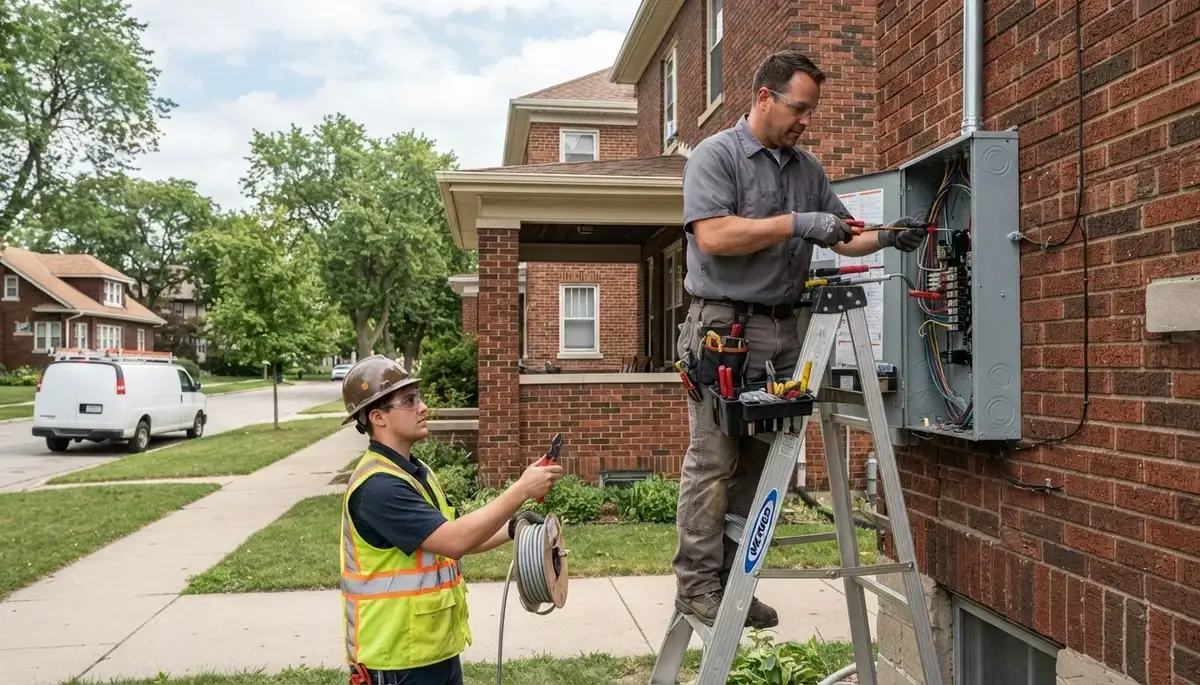
Brick bungalows with plaster walls and detached garages need outdoor runs planned differently than a frame house with an attached garage. Homes with full basements give electricians clear access to the panel; houses where the service enters through an exterior wall add steps to every job. Professional GFCI circuit installation in these homes means working around original framing that was not built with modern wiring in mind.
The range of work these houses need covers reliable generator installation, quality smoke detector installation, specialist electric car charger installation, and expert ceiling fan installation, each one approached with the access and construction of these homes in mind.
What the Age of West Milwaukee Homes Still Decides Today
Most of the houses in West Milwaukee went up in the forties and fifties. Homes built in those decades came with sixty-amp services, two-prong ungrounded outlets, and wiring that ran through walls with no ground conductor. Three things follow from that: the panel is almost certainly undersized for how the house is used now, the outlets in most rooms offer no ground path, and any circuit added later may have been spliced into wiring that was already at capacity.
The Panel Has No Room Left
A homeowner notices there are no open slots in the breaker box, or that the main is a fuse block rather than a breaker. Behind that is a sixty-amp service sized for a refrigerator, a few lights, and a radio. Add a window unit, a dishwasher, and a chest freezer and the panel is running past what it was built to handle. Left alone, that means nuisance trips at best and heat buildup at the panel at worst.
Local electricians replace the panel and bring the service up to what the house actually draws today. The new box has room for circuits the homeowner has been putting off adding, and the work is sized to last.
Outlets That Have No Ground
Two-prong outlets throughout the house tell the homeowner the circuits were never grounded. Plugging in a computer, a television, or a modern appliance through an adapter does not fix that; it just hides the gap. An ungrounded circuit offers no path for a fault to clear safely, which means the device takes the hit instead of the breaker.
Adding grounded outlets to these circuits means either running a new ground conductor back to the panel or installing the outlets with test and reset buttons where the code allows it. Either way, the homeowner stops relying on adapters and the circuit does what it is supposed to do.
Wiring That Has Reached Its Limit
Decades of use take a toll on insulation that was not rated for the loads these houses carry now. Cloth-wrapped wiring becomes brittle, connections at outlets and switches loosen over time, and a circuit that worked fine for thirty years starts causing flickering lights or outlets that stop holding a plug. The wiring itself has not failed yet, but it is close.
Replacing the affected runs and tightening or replacing the connections restores the circuit to full capacity and removes the fire risk that comes with loose wiring inside a wall.
The Service Was Never Sized for What Was Added
A car charger, a new air conditioning unit, or a shop compressor in the garage each draws more than the original service was built to supply. Running one of those loads on a panel that was sized for a much smaller house means the service is working at or past its limit every time that load kicks on. Cold snaps that push the heat higher make that demand spike even further.
Local electricians add capacity by upgrading the service entrance and replacing the panel, then dedicate circuits to the new loads so the rest of the house is not competing with them. The homeowner can run the car charger and the air conditioning at the same time without watching the breakers.
Getting the Work Done Inside a Finished House
Brick bungalows with plaster walls and finished basements do not give electricians an open path to pull new wire. Running a circuit from the basement panel to a second-floor bedroom means finding a route through wall cavities that were never meant to be accessed, and doing it without opening every surface along the way.
Local electricians who know these houses plan the route before the work starts, use the access points the house already has, and patch what needs patching so the homeowner is not left with open walls. The job takes longer than it would in a newer house, but it gets done with minimal disruption.
Call (414) 409-0101 to arrange a no-pressure visit with a local electrician who knows West Milwaukee homes and can tell you exactly what the work involves before anything is scheduled.
On Call Electrical delivers work built to hold in West Milwaukee homes, job after job.

Full Electrical Services Available Across West Milwaukee, WI
The list below covers the range of electrical work available to homeowners in West Milwaukee, WI. Find the service that matches what the house needs and call to get it scheduled.
Urgent Electrical Repairs for West Milwaukee, WI Homes
- Electrical Repair - A breaker that will not reset or an outlet that stopped working in a house this age needs a local electrician, not a reset and a wait.
- Outlet Repair - Outlets that spark, feel warm, or no longer hold a plug are a sign the connection behind the wall has loosened over decades of use.
- Switch Repair - A switch that clicks but does nothing, or one that feels warm, points to a wiring problem inside the box that should not be left open.
- Ceiling Fan Repair - A ceiling fan that wobbles, hums, or runs only on one speed in an older home often has a wiring issue rather than a fan problem.
- Electrical Service - When the service itself is the problem, a local electrician can assess what the house needs and lay out the work clearly before anything starts.
If any of these match what the house is doing, a call to a local electrician is the right next step.
Panel, Capacity, and Wiring Work for West Milwaukee, WI Homes
- Electrical Panel Upgrade - A sixty-amp panel in a house that now runs central air, a dishwasher, and a car charger is a panel that needs to be replaced.
- Electrical Panel Installation - New panel installation brings the service in line with what the house draws and leaves room for the circuits that have been put off.
- Electrical Wiring - Original wiring in a house built in the forties or fifties was sized for loads that no longer reflect how the house is used.
- New Construction Wiring - Additions and finished basements in older homes need new wiring run to match the rest of the house and meet current requirements.
- Home Energy Audit - An audit of how the house uses power shows where the panel is working hardest and where a circuit change would make the biggest difference.
These houses were wired for a different era, and the work that brings them up to what they carry now is straightforward when a local electrician knows the construction.
Safety and Protection Work for West Milwaukee, WI Homes
- GFCI Circuits - Kitchens and bathrooms in houses this age were not built with the outlets that have test and reset buttons, and adding them removes a real risk.
- GFC Outlets - Replacing two-prong outlets near water with the right protected outlets is one of the most direct safety upgrades in an older home.
- Smoke Detector Installation - Detectors placed where the house plan and the ceiling height put the smoke first give the homeowner the time a poorly placed one does not.
- Fire Alarm Installation - A whole-house alarm system tied to the panel gives a West Milwaukee home a layer of protection that a battery detector alone cannot match.
- Lightning Surge Protection - A surge at the panel can reach every device in the house through the wiring; protection installed at the panel stops it before it travels.
- Whole Home Surge Protection - One event on the line can damage appliances, electronics, and the panel itself; protection at the service entrance covers everything downstream.
A local electrician working in West Milwaukee can walk through the house, identify the gaps, and explain what each fix does before any work is scheduled. Homeowners in South Milwaukee, WI residential electricians face the same safety gaps in houses built in the same years, and the same fixes apply. The work is not complicated, but it does need to be done by someone who knows what was installed in a house of this age and what it takes to bring it up to where it should be.
Lighting, Outdoor, and Added-Load Work for West Milwaukee, WI Homes
- Electric Car Charger Installation - A dedicated circuit for a charger keeps the car charging overnight without pulling from circuits the house already needs.
- Landscape Lighting - Outdoor lighting on a house this age often runs on wiring that was added without a dedicated circuit, which a local electrician can correct.
- Security Lights - Motion-activated lights at the back of a detached garage or along a long driveway need a circuit that was planned for outdoor use.
- Recessed Lighting Installation - Adding recessed lights to a plaster ceiling in a brick bungalow takes a different approach than the same job in a newer house with open framing.
- Generator Installation - A standby generator tied to the panel keeps the house running when the line goes down, with a transfer switch that handles the switchover automatically.
These are the loads that houses in West Milwaukee are being asked to carry now, and a local electrician who knows the construction can add each one without overloading what is already there.