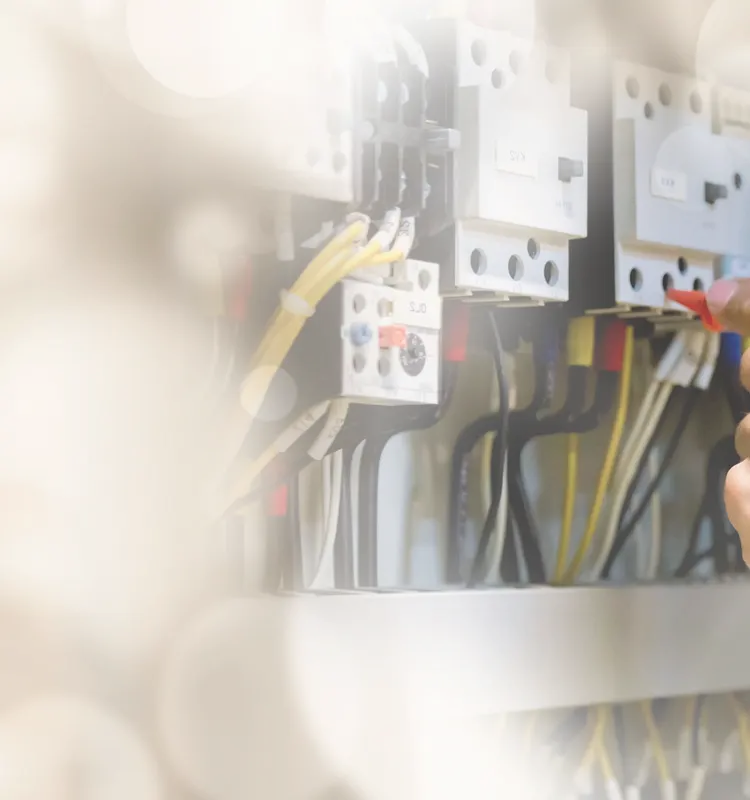
Homes in Elm Grove were built largely through the fifties and sixties, and the electrical services in Milwaukee network that reaches them sees the same patterns repeatedly: panels sized for a fraction of today's load, two-prong outlets in rooms now running multiple appliances, and professional electrical panel upgrade needs that have been quietly building for decades.
Homeowners here call a local electrician rather than a general one because the work inside these houses rewards someone who already knows what was put in them and what it takes to bring it forward.
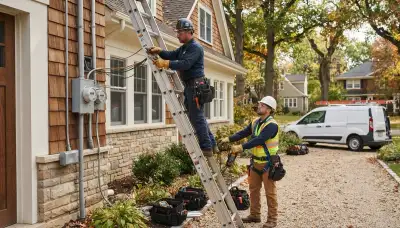
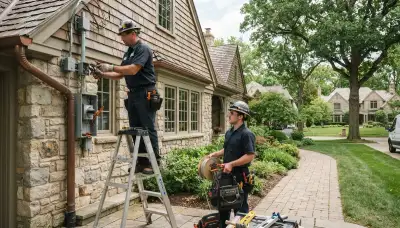
What Local Electricians Know About Elm Grove Homes
Most houses in Elm Grove sit over full basements, with panels mounted on basement walls and wiring that runs through finished floors and ceilings. A local electrician reads that layout on arrival and plans the job around it rather than discovering it mid-work.
The two jobs that come up most often are panel replacements on houses that still have undersized fuse boxes and circuit additions where the original count never matched how kitchens and bathrooms are used today. Homeowners in nearby Brookfield, WI electrical services face similar situations with houses of the same era.
Getting the problem looked at early keeps a manageable upgrade from turning into a full rewire.
Electrical Work Matched to How Elm Grove Homes Are Built
An off-the-shelf approach fails in these houses because the basement panel location, the finished walls between floors, and the original wiring routes all shape what a job actually involves before a single wire is touched.
Detached homes on wider lots here often have a separate garage or outbuilding that was wired as an afterthought, running long outdoor circuits that have aged independently of the main house. Homes with attached garages present a different set of access questions when a new circuit needs to reach the panel. Expert ceiling fan installation in a house with finished ceilings, for example, requires knowing where the joists run before opening anything.
Across Elm Grove homes, the work that fits these structures includes quality GFCI circuit installation near every water source, specialists in recessed lighting installation for finished rooms, reliable generator installation sized to the panel, and professional smoke detector installation tied into the home's wiring.
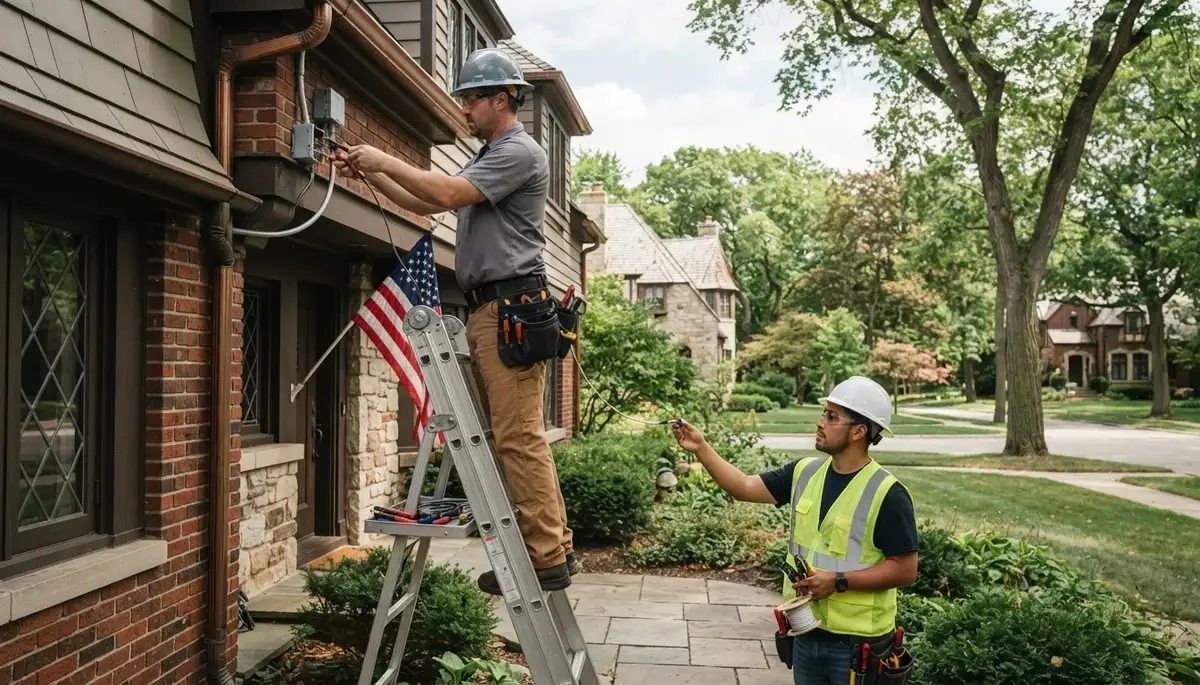
What the Age of Elm Grove Homes Still Decides Today
Most of the houses in Elm Grove went up in the fifties and sixties. Builders of that era installed 60-amp service as standard, ran two-prong ungrounded outlets through every room, and designed kitchens and bathrooms around a load that bears no resemblance to what those rooms carry now. Three things follow directly from that: the panel is almost certainly undersized, the grounding system is incomplete or absent, and the circuit count in working rooms falls short of what the homeowner actually needs.
The Panel That Has No Room Left
A breaker box with no open slots and a main rated below what the house draws is not a future problem - it is a present one. Homeowners notice it when a breaker trips and will not reset, or when adding anything new to the house turns into a conversation about what has to come off first.
Local electricians replace the undersized box with a panel sized for the full load the house carries now, including anything that has been added since the original build. Homeowners in Hales Corners, WI with houses from the same period have had the same work done with the same result.
Outlets That Were Never Grounded
Two-prong outlets throughout a house are a sign that grounding was not part of the original wiring. Plugging a three-prong adapter into an ungrounded outlet does not add a ground - it just removes the visible reminder that one is missing. Electronics, appliances, and anything with a metal case depend on that ground to stay safe.
Adding grounded outlets to these homes means either running a new ground wire back to the panel or installing the outlets with test and reset buttons where code allows it. Either way, the homeowner ends up with outlets that protect what is plugged into them.
Wiring That Runs Warm at the Connections
Homes built in the late sixties and into the early seventies sometimes have aluminum branch wiring, which expands and contracts at a different rate than the copper devices it connects to. Over years of use, those connections work loose. An outlet that feels warm to the touch, or lights that flicker on one circuit while everything else holds steady, is often tracing back to a connection that has started to fail.
The correction involves going to each device on the affected circuits and adding a connector that joins the aluminum wire to a short copper tail, so the device sees copper at its terminal. That stops the loosening cycle and removes the heat that built up at the connection.
A Service That Was Never Sized for What Got Added
A car charger, a pool pump, or a new air conditioning unit each draws more than the original service was built to supply. A house that runs all three on a panel sized for a smaller load will trip breakers under heavy demand, and a hot spell that pushes the air conditioning hard only multiplies the draw on a system already at its limit.
Adding capacity means replacing the service entrance equipment and the panel together so the new rating runs all the way through. Once that work is done, the homeowner can run the charger, the pool equipment, and the air conditioning without watching the breaker box.
Finished Spaces That Complicate Every New Circuit
In a house where the basement ceiling is drywalled and the first floor walls are plaster, running a new circuit from the panel to a room above is not a morning of work. Every finished surface between the panel and the destination is a decision about whether to open it, work around it, or find a path that avoids it.
Local electricians who have worked in these houses know which routes avoid the finished surfaces entirely and which ones require a small, repairable opening. The goal is to get the circuit where it needs to go without leaving the homeowner with a wall project afterward.
Call (414) 409-0101 to set up a no-pressure visit with a local electrician who can walk through what the house actually needs and what the work involves before anything is committed.
On Call Electrical brings the same standard of work to every Elm Grove home, every time.

Full Electrical Services Available in Elm Grove, WI
The list below covers the range of work available to homeowners in Elm Grove, WI. Find the item that matches what the house needs and reach out to talk through it.
Urgent Electrical Repairs for Elm Grove, WI Homes
- Electrical Repair - a breaker that trips repeatedly or an outlet that stopped working needs attention before the cause spreads to other circuits
- Outlet Repair - outlets that spark, feel warm, or have stopped holding a plug are a sign the connection behind the cover has failed
- Switch Repair - a switch that clicks without result or stays warm to the touch is worth having checked before it becomes a larger problem
- GFCI Circuits - kitchens and bathrooms in these older houses often lack the outlets with test and reset buttons that protect against shock near water
- Electrical Service - when the main service feeding the house is undersized or damaged, everything downstream runs at risk
If something in the house is not behaving the way it should, a local electrician can find the cause and fix it the first time.
Panel, Capacity, and Wiring Work for Elm Grove, WI Homes
- Electrical Panel Upgrade - houses built in the fifties and sixties were wired for a load that bears no resemblance to what the home carries now
- Electrical Panel Installation - replacing an old fuse box with a modern breaker panel gives the house room to grow and removes a common fire risk
- Electrical Wiring - wiring from that era was not designed for the number of circuits a home needs today, and adding them requires running new wire correctly
- GFC Outlets - adding properly grounded outlets to a house that was wired without them protects every device that depends on a ground to operate safely
- New Construction Wiring - additions and finished spaces in these homes need wiring that matches the panel's current capacity, not the original one
Panel and wiring work in houses built for a smaller load is what changes what the home can carry for the next several decades.
Safety and Protection Work for Elm Grove, WI Homes
- Smoke Detector Installation - hard-wired detectors tied into the home's electrical system stay active even when a battery fails
- Fire Alarm Installation - older homes with original wiring carry a higher risk of arc faults, and a connected alarm system catches the signs before they become a fire
- Whole Home Surge Protection - a single surge event can damage every appliance and device connected to the panel; protection installed at the source stops it there
- Lightning Surge Protection - a direct or nearby strike sends a surge through the service entrance that unprotected panels pass straight to the wiring inside the house
- Home Electrical Inspections - a full inspection of a house built in this era finds the problems that have been building quietly before they reach a failure point
Safety work in these houses does two things at once: it removes the risks that were built in when the house was wired, and it adds protection against the ones that come from outside. A homeowner who has had the inspection done knows exactly what the house is carrying and what it is not.
Lighting, Outdoor, and Added-Load Work for Elm Grove, WI Homes
- Electric Car Charger Installation - a dedicated circuit sized for a home charger keeps the car ready without pulling from circuits the house depends on
- Landscape Lighting - outdoor lighting runs on circuits that were often added without accounting for the rest of the outdoor load
- Security Lights - motion-activated lights tied into a dedicated circuit do not share load with the outlets they sit near
- Pool Pumps - pool equipment draws more than most original service entrances were sized to supply, and the wiring that feeds it needs to match
- Recessed Lighting Installation - adding recessed fixtures to finished rooms in these houses requires planning the circuit path before opening anything
Outdoor and added-load work on Elm Grove homes means accounting for what the original service was built to carry and what has been placed on it since.